


At the dawn of 2025, we Americans assessed how things would proceed in the country following another tense election season. We in Minnesota, with our governor on the national ticket, had this tension exacerbated at home—as well as in our State House, as the November elections resulted in a 50/50 power split and a conflict that led to our government not functioning at all.

At the dawn of this new era of sudden, disruptive technological change, practically every institution and industry is struggling to adapt. Traditional media adjusts to a world with websites and social media; TV, film, and music industries adjust to YouTube and streaming; retail stores have been redefined by online shopping; and companies like Uber (and now robotaxis) are revolutionizing transportation. We can see something similar happening in education, medicine, etc.
The founders of the company Próspera asked: In addition to how we shop or consume media, why don’t we use modern technology to enhance another fundamental institution for humanity—the one we saw malfunction in my state—government?
An iteration of this “startup society” idea long theorized by libertarian-thinkers, Próspera has proposed “the buildout of new cities inside of special economic zones… in partnership with governments as a strategy to bring investments, generate jobs, and drive economic activity,” said Erick Brimen, founder and CEO.
More than any other proposal in this area, Próspera is building. Breaking ground May 2020, they have laid the legal and physical infrastructure for a community on a Caribbean island off the northern coast of Honduras.
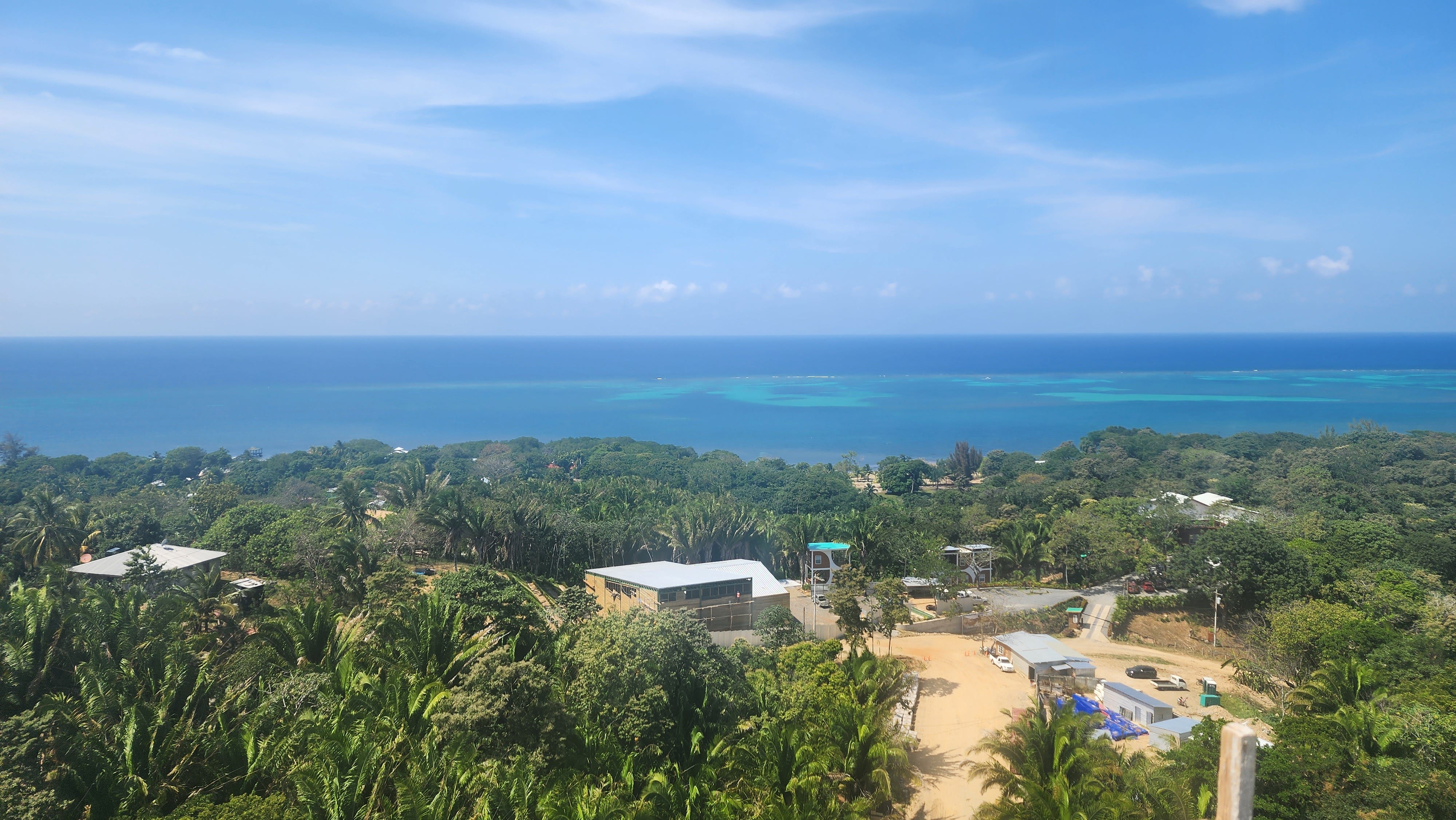
On January 31, I traveled there to see what it is like on the edge of this societal-technological frontier. What I also discovered were insights into the operation of our society—in America as well as my state, then on Day #18 of the House standoff.
***
In the winter months, Minnesota's own Sun Country airlines flies direct. In under five hours, I was looking out the airplane window upon the blue-green hues of the sea massaging the lush palm-covered shores of Roatan Island.
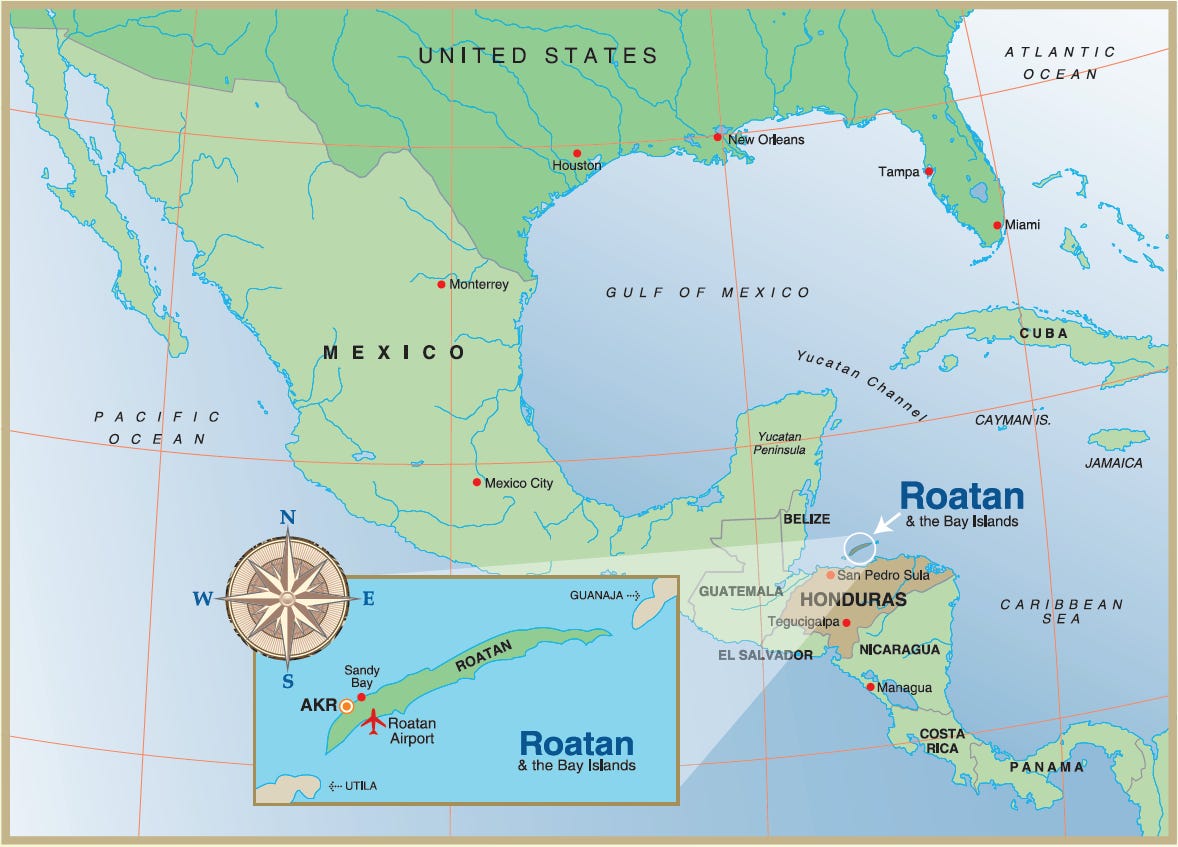
Long interested in this trend, this was my third visit to this zone, each seeing progressive development of this coastal 58 acres—from an open-air office building and a few housing units to now featuring a completed small factory, a learning center for area children, landscaped grounds down to the beach, a 13-story condo tower (the tallest building on the island), and the management of a nearby golf course and resort.
From a restaurant at that resort, I sat down with Brimen, 41, the Venezuelan-born founder with combed-back black hair and matching, black-rimmed glasses.
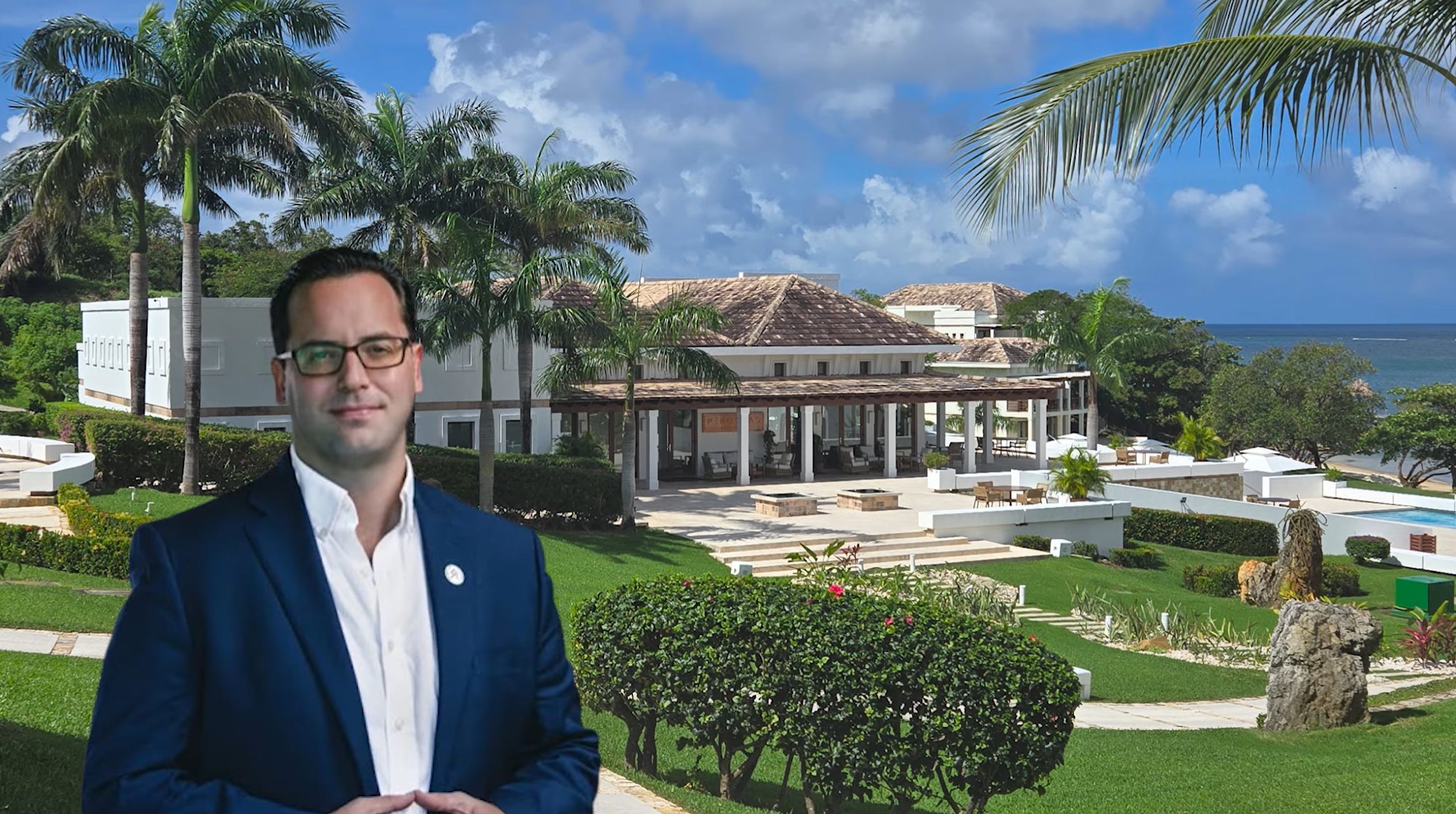
“You gotta attract people here with conditions for them to succeed,” he explained.
Attract they have.
Utilizing the physical and legal infrastructure, a growing number of remote workers, companies, and organizations now call the Próspera development zone home. This includes a biotech community called Infinita, whose website describes it as a place “where founders build world-class companies advancing longevity through biotech, computation, and science…”
Three years ago, a German named Niklas Anzinger first visited Próspera and witnessed the startups already in operation there, such as Minicircle gene therapy. By the end of 2022, the business development professional took a leap and co-founded Infinita Venture Capital, pooling investors’ funds to kickstart more of these kinds of companies.
“Things that were too difficult to do, or impossible, elsewhere,” Anzinger said in describing the startups they backed.
He and I also sat down during my stay on the island, this time out on the 4th floor terrace of the 13-story Duna Tower overlooking the Caribbean.
By early 2023, Infinita VC hosted a pitch event for startups seeking capital. A year later, he organized his first “pop-up city,” which, unlike conferences, see their length allow for more established endeavors like community projects and coursework. For Infinita, this means research, lab projects, and lecture series on the academic side of things; and yoga, meditation, and even attendee-organized group therapy sessions on the health and wellness side
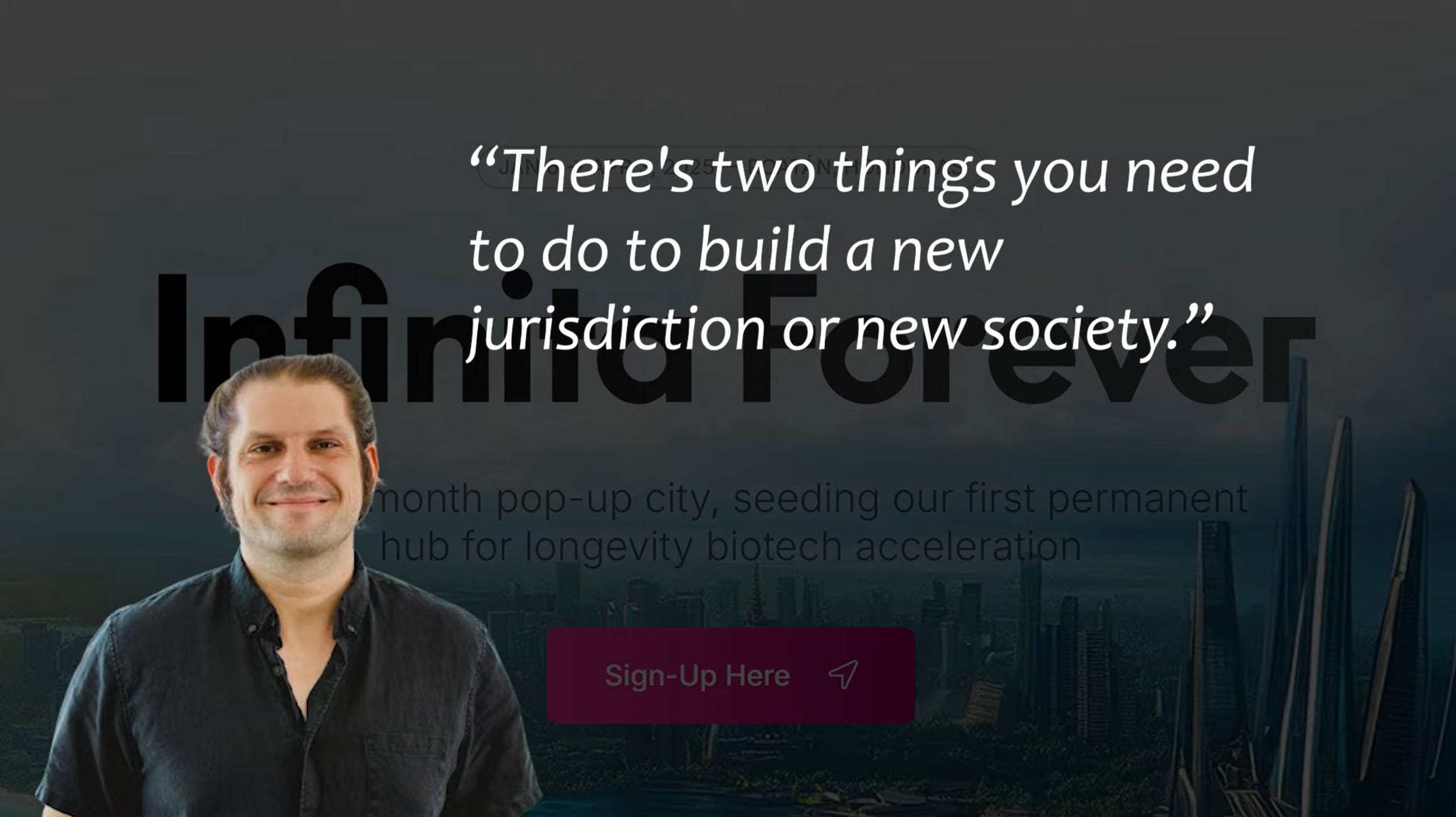
“There's two things you need to do to build a new jurisdiction or new society,” explained the 36-year-old with sandy-colored manbun and sideburns. “One is the infrastructure part, and the other is the people. The people part requires creating kind of a brand that attracts people to come.”
Attract they have.
Last winter’s inaugural gathering caught fire and saw the arrival of internet-famous thought leaders in finance, philosophy, and health: Balaji Srinivasan, Naval Ravikant, and Bryan Johnson. This year’s gathering—the impetus for my visit—was dubbed Infinita City, stretching from January to April.
***
For the 20-minute drive leaving the airport, along Roatan Island’s main east-west corridor, we passed by a mix of American-like retail developments and Central American-like colorful apartment buildings with small businesses at their base—each with clothing hanging in the windows (laundry to dry or product to sell).
We then slowed and turned into the gated entrance of the resort where I and many fellow attendees of Infinita City would stay. (In exchange for media work I did for Infinita, most of my housing costs were covered.)
The next morning, the van shuttle drove us to the Próspera development zone, maybe a mile away as the bird flies. Yet limited roads meant another 20-minute winding route over asphalt and dirt. The Infinita City community—mostly young remote workers, startup founders, and some students—occupied much of the space within Duna Tower, including a science lab, a coworking space, that 4th floor terrace, and the classroom where I attended my first sessions.
One of the visiting lecturers, a black-bearded neuroscientist from MIT named Ed Boyden, sat at the front of the white-walled classroom discussing his research on brain mapping.
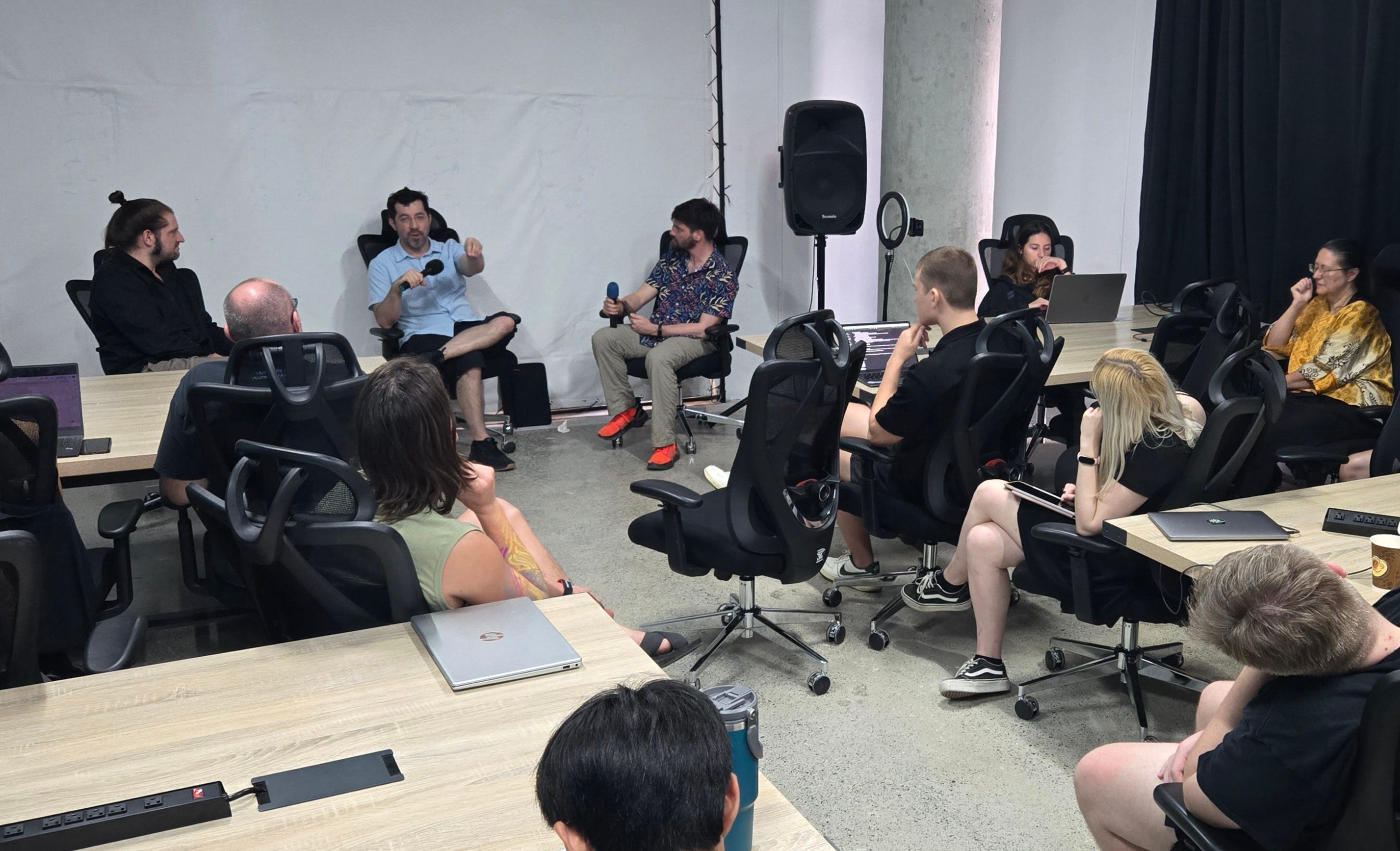
This lecture, along with the diverse group of young adults seated at the tables, reminded me of college—which primed me for a surprise in the session to follow.
This was a “philosophy café,” explained the young Spanish woman in charge of the afternoon gathering, a time to “share your spiciest” and “most controversial” academic or philosophical ideas. Upon hearing this, I paused with the thought of things going sideways real fast—someone blurting-out a socially inappropriate opinion followed by scoffs of those offended.
I didn’t know whether it was more calming or ironic, then, that the facilitator kicked off the session with a reminder to all in the room that “This is a safe space.”—said not as a warning toward those thinking of sharing over-the-top ideas but to encourage them to do so.
I awaited a scene resembling something from the TV show, “The Office”—the American version. Just as it was my American mind that went to extreme places that did not manifest.
Oh, some ideas were spicy, alright. Let’s bring back state-sanctioned corporal punishment, said one guy. Another raised eyebrows by declaring only women should be included in those venturing out to colonize new planets. Yet the ideas were presented so lightly. I'm not sure the speaker believed what he or she suggested. Just the consideration of such ideas was adequate for new lights in the rooms of our intellect to activate, and discussion ensued.
Also activated in my mind was the realization that this exercise in intellectual elasticity would likely not see the light of day on a college campus in the U.S. Yet there it was within this group of young men and women at Infinita City, a community representing a melting pot the likes of which the U.S. likes to boast, having “ingredients” from: Romania, Spain, Russia, Sweden, the Philippines, Croatia, Slovakia, Israel, England, US, Canada, Honduras, and several other Latin American countries.
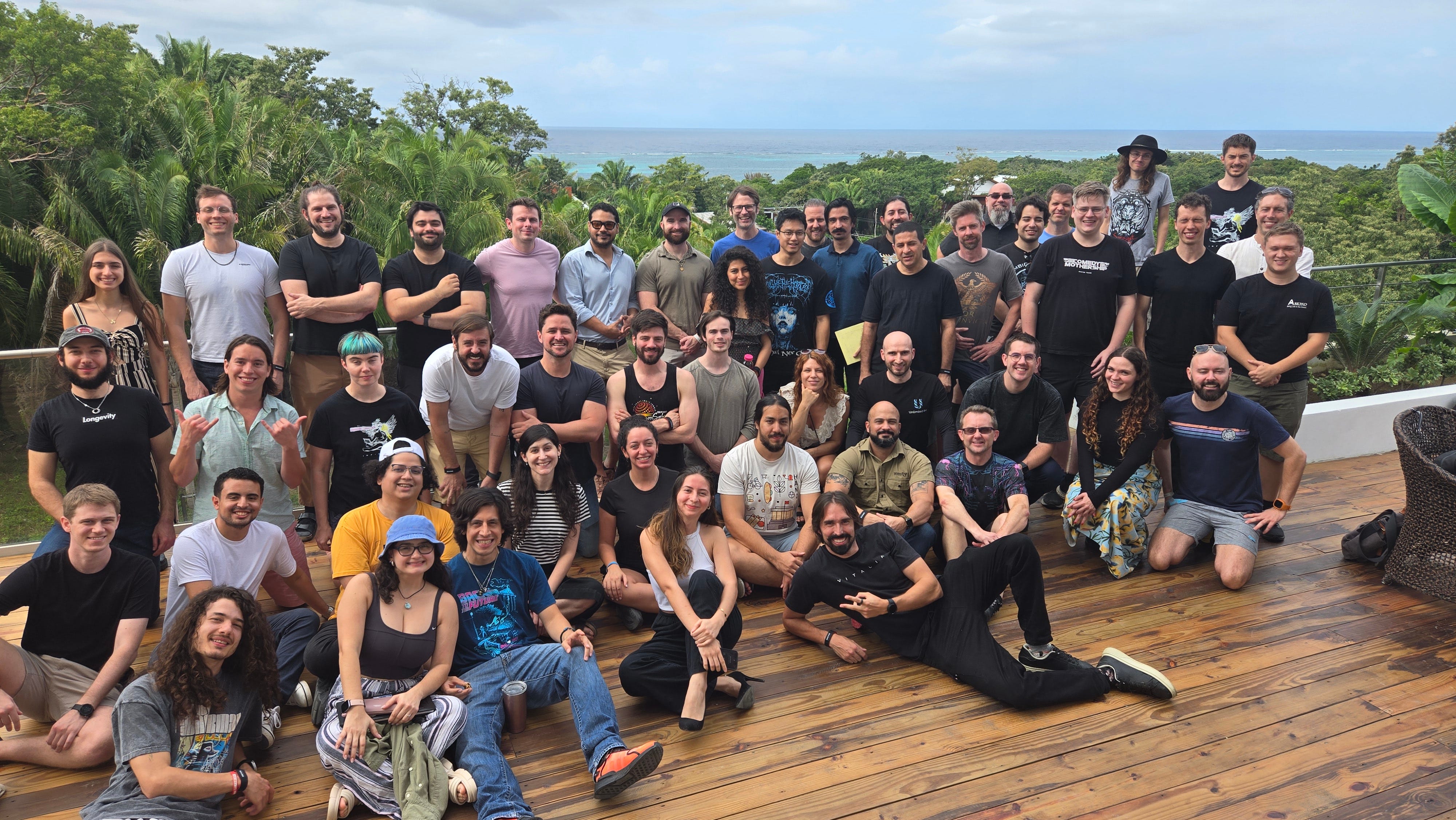
In this innovative societal arrangement, we seemed to have the best of both sides of the political binary: a balance of politically left-leaning idealized ethnic diversity and a right-leaning idealized high trust society rooted in a common belief system.
This balance clashed with not just the U.S. college classroom but the U.S. and even the entire Western world in general, where the dynamic of the political binary has become adversarial, exacerbating the reactivity of either side.
***
During Week 2 of my stay, I dug deeper into this experiment in governance, having those sit-downs with leaders Brimen and Anzinger as well as with a company calling this place home.
Symbiont Labs is a biotech startup specializing in chip implants for the “augmented experience”—enhancing the real world with computer-generated perceptual information. Rehabilitative purposes such as echolocation for the blind are one thing. But these guys want to enhance the human experience via internal hardware as much as companies developing external hardware like headphones and VR headsets.
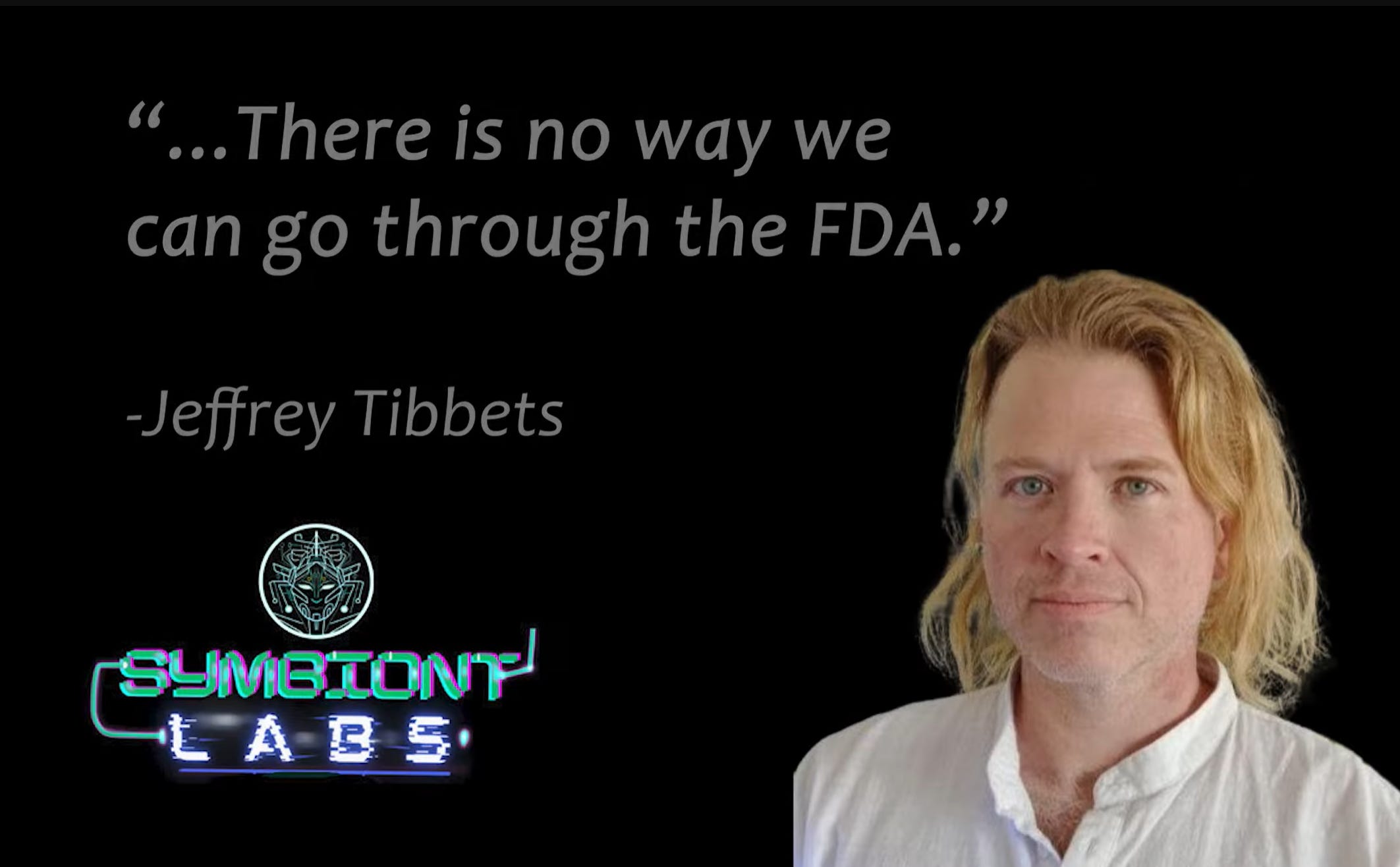
For purely augmentative purpose, “[there is] no way we can go through the FDA,” said Jeffrey Tibbetts, 44, CEO and California native, who, with his long, messy blonde hair, looked like a seasoned West Coast surfer.
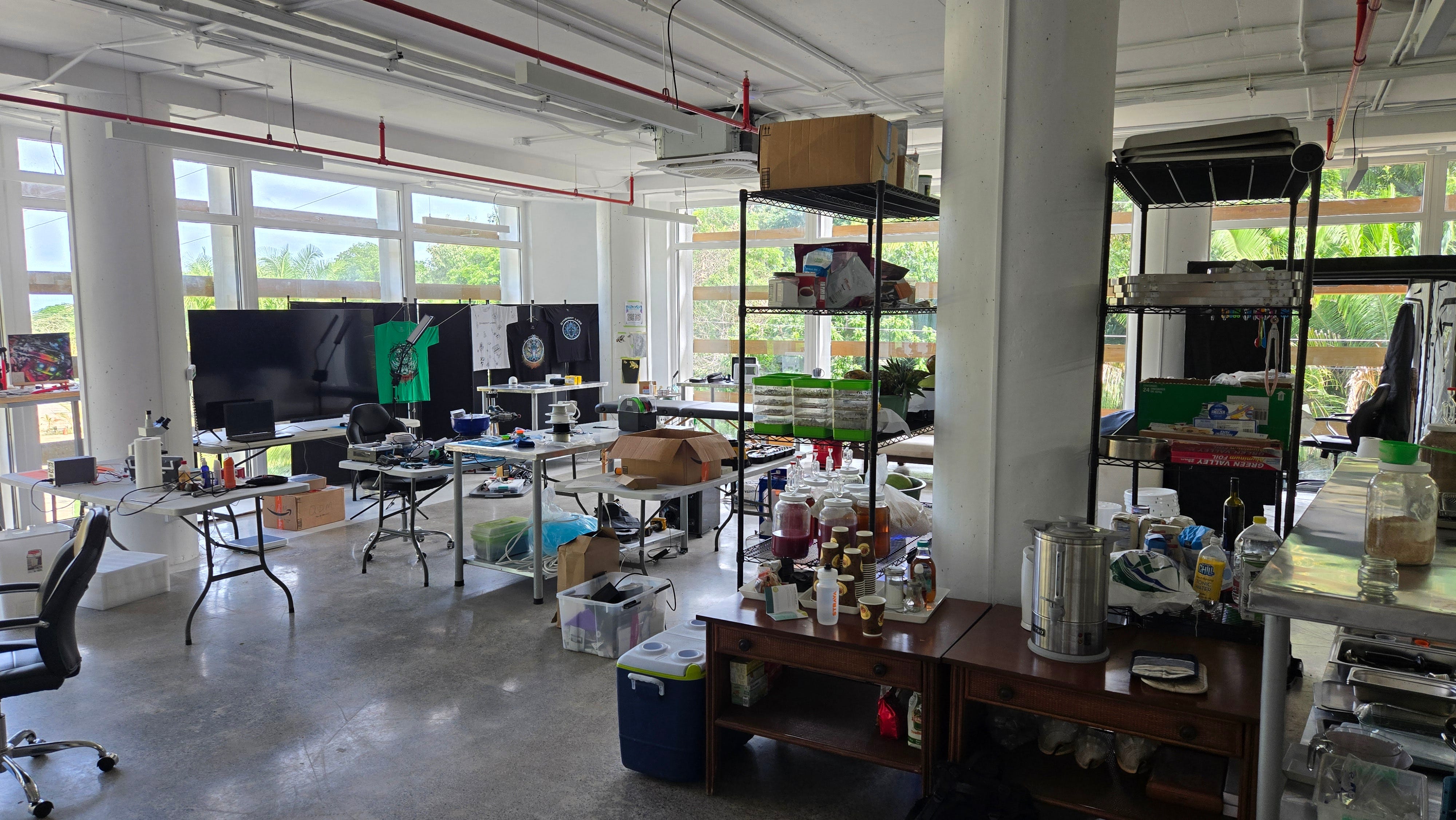
There in the science lab within the Duna Tower, tools and measuring equipment sat upon tables at the different workstations researching plant life, DNA editing, food science, and a large table where researchers built prototype devices. Here, a biomedical student from upstate New York, Quinn, 24, explained his role with Symbiont Labs—something called “subdermal haptic feedback” and the process of implanting a chip under the skin to receive sensations.
He brainstormed out loud ideas such as diabetics receiving a buzz when their blood sugar is low, a homeowner sensing when a toxic gas is in the air, or just anyone wanting to literally feel—via internal sensations—where obstacles are in space.
These implants are not just theory, I accidentally discovered.
Asking for Quinn’s contact info, I knew better than to expect a business card. But I wasn't ready for something beyond an email address or Telegram contact. Yet with a wave of his hand over my phone like a magic wand, his personal website lit up thanks to the NFC chip embedded into his palm.
“There is no place in the world you could do this before,” said Tibbetts looking on.
If they could choose another place, they might select Minnesota.
Not knowing my origins, Quinn had earlier remarked in passing, “We'd love to work with Medtronic.”
This Minnesota-based medical technology giant joins the Mayo Clinic, the University of Minnesota (where the world's first successful open-heart surgery took place), and other entities in making my state a med-tech Mecca. But even this “Mecca” isn’t impervious to the regulatory hurdles imposed federally.
“It’s so overly complicated,” Minnesota-born startup founder Russell Moore, 38, later told me when back in the U.S. “And it’s often difficult to navigate—especially for early-stage companies.”
Moore, President and CEO of Juna Corporation, is five years into working on a product that rests on the surface of the skin to assist in medical implant removal.
“You have to be extremely patient,” said the inventor and engineer from Rochester, explaining how regulations and the costs of meeting them interfere with innovation in this field.
Moore uses a Minnesota-based consultancy and manufacturer for his company. But it’s not the state Anzinger plans to expand the Infinita network. That would be Montana, he said, with their enhanced 2023 “Right to Try” Act, adding flexibility for medical research and experimentation independent of FDA approval.
Cryptocurrency is another stand-out tech integration at this start-up society—as well as in some U.S. states modifying their legal frameworks for the development of this new technology.
Próspera’s advancement in governance, however, theorizes a future where competition for the U.S. goes well beyond its 50 states.
“We envision a world where instead of 200 service providers [i.e. the nations of the world], there's 2,000 or 20,000,” Brimen declared at our coffee.
Like the Infinita network, the Próspera team sees this zone as the first of many around the world using their legal platform. Meanwhile, other entities may build their own platform, seeing legal and government options for the globally minded increase dramatically.
And it’s not the quantity but the quality of these societies that is the real game-changer.
The practice of polycentric law allows one such location to accommodate multiple legal codes. Within the Prósperan framework (which handles taxes, residency, and other zone-wide operations), individual businesses can select from a list of many industry-specific regulatory codes. This selection will help determine the insurer, who’ll act as enforcement—as opposed to one, state-imposed authority.
“[People are] stuck with one provider, whether they like it or not,” stated Brimen, referring to how people live their lives in their nation today. “The only thing they can do is be one of a million people having a voice every four years, and that’s very limited.”
This revolutionary idea is only in its infancy, manifesting through the entities incorporated at Próspera. The promise, however, seemed to also shine through the social energy there. Residents seemed to exist on a plane above the fray of politics as usual. Rather than the top news items of the day, they discussed their projects, inquired about ideas, and simply got to know and supported one another. For the visitors like me, being away from home helped with this. But also, what need is there to discuss politics when free to choose one’s own policy?
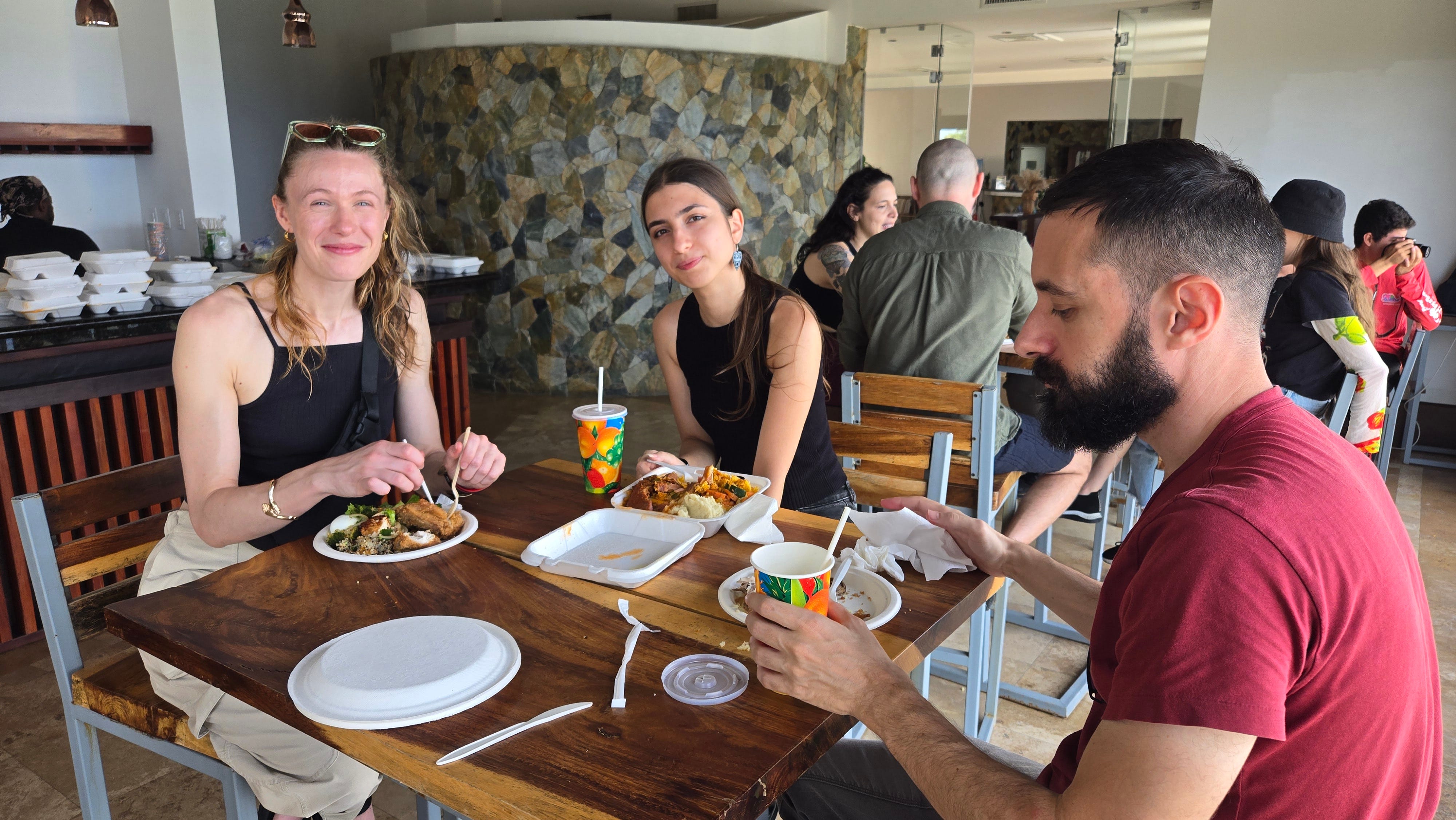
Between the vegan college-aged woman there leading meditation sessions and the 30-year-old meat-eating, weight-lifting crypto founder, one can imagine the social wedge shoved between them in the U.S. due to political differences. But not there. It felt like a reset or fresh start manifested in this society made for the new era we’ve entered.
***
Despite all its unknowns and risks and even a headline-grabbing conflict with the Honduras government, the uplift at Próspera wasn’t just felt. It’s quantifiable.
“Up and to the right. Across the board,” Brimen bluntly answered in reference to the growing numbers of companies incorporated at Próspera (about 300), eResidents (about 2000), and investments made (now over $150M).
Regarding the Infinita community, there have been “1000-1500 total visitors,” said Anzinger. “And probably up to 100 or more companies that are affiliated with us.”
I’m reminded of how the founding of American democracy opened the door to an explosion of industry, art, and prosperity that continues to spread across the globe 250 years later. The future of Próspera and Infinita notwithstanding, I believe these types of more fluid, equitable, efficient governance models will open the door for the next epoch of human actualization. And just as the U.S. breaking from the British Crown didn't mean the end of England, the rise of these new societal systems won't mean the end of the existing governments. It just means they need to evolve like animals growing fur at the dawn of the Ice Age.
For all the chaos here today, the U.S. is at an advantage with its more bottom-up, decentralized structure. We’re already seeing rapid integration of Bitcoin, and the current administration floated the idea of “freedom cities”—municipalities promising similar potential benefits as Próspera.
All these experiments will have mixed success, as all do. But not adapting technologically, legally, and socially means stagnation—or worse.
One afternoon, following a lecture in the Duna classroom, I entered the coworking space to buy a sparkling water with my $ICC cryptocurrency from my phone’s wallet. On the phone, I read a headline indicating how my home state was faring meanwhile: “Standoff at MN House enters third week without power-sharing agreement”.
We can't rely on past success to ensure future wellness. We just saw the gears of the modern world (reactive population and politicians within a dated political model) grind my state government to a halt. For us in Minnesota, as well as several other airports in the U.S., a direct flight connects us to a place revealing some ways to adapt.
For a video essay adaptation of this story, watch here: A Society Built for the 21st Century - My Experience at Próspera