


No, this isn’t some whacky 9/11 conspiracy involving Mormons.
It’s a forgotten, revealing tragedy.
In September 1857, the American West was its legendary wild self with vast empty lands dotted with communities and passersby armed and ready to defend themselves.
One wildcard in the region were those congealed under the banner of a new religion—the Mormons in the Utah Territory. Still charged from persecution in states eastward, they saw outsiders increasingly as threats.
So they went on a massacre.
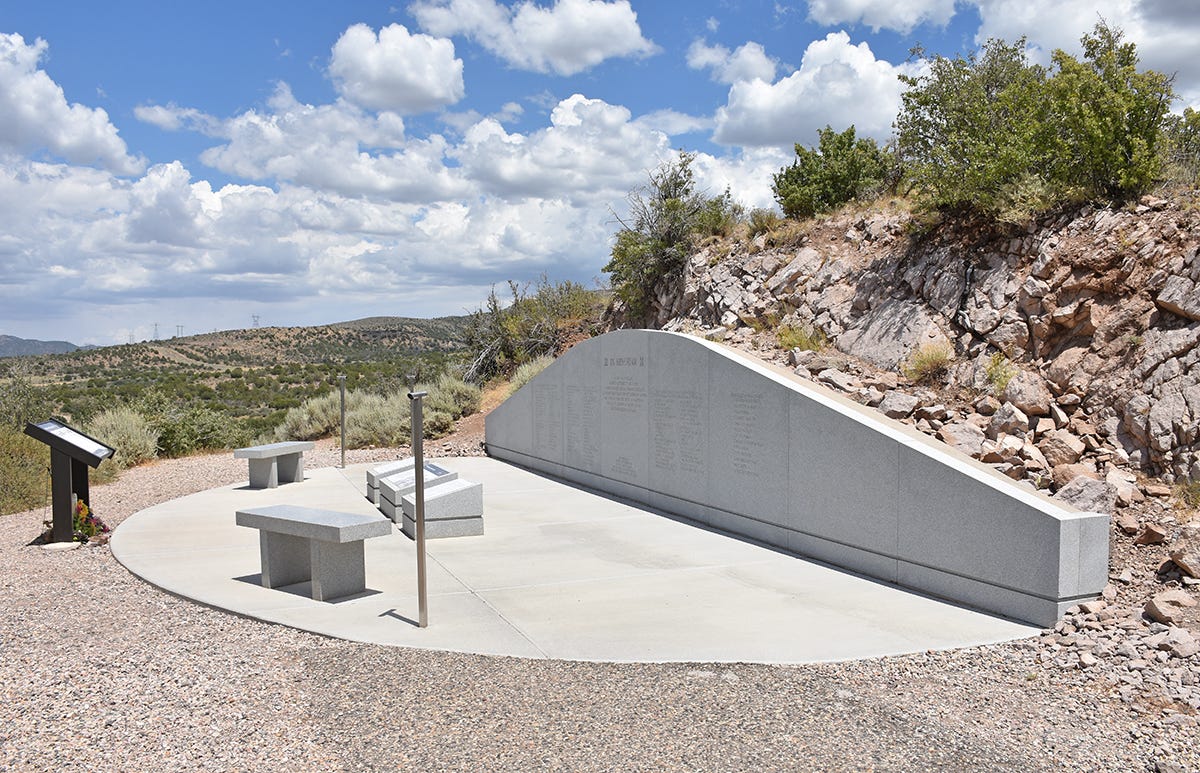
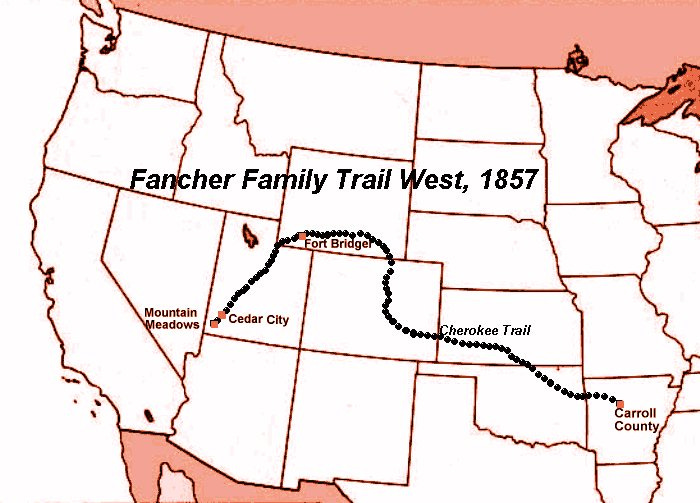
A wagon train of Arkansas families, known today as the Baker-Fancher Party, were passing through some Mormon settlements on their way to California—reportedly with some verbal conflict. On September 7, Mormon militiamen, aided by Paiute Native Americans whom they had recruited, attacked this wagon train at a place called Mountain Meadows.
The Baker-Fancher Party fortified themselves behind their wagons and fended off the attack. In addition to being strong fighters, they were observant and noticed how some of “Paiutes” were actually white men donning painted skin and Paiute attire. The resultant standoff, along with knowing their cover was blown, led to the act whose barbarity was matched by its underhandedness.
On September 11, the militiamen approached under a white flag and promised to safely escort the families past local hostiles if they surrendered their weapons. Trusting the militia, the emigrants agreed. Now unarmed, one of the Mormons would later give the signal, and the militiamen and their allies turned on the Arkansas families and murdered approximately 120 men, women, and children.
Point-blank shootings, clubbing the victims, stabbing them.
They spared 17 children under seven years old, believing they couldn’t effectively testify. The orphaned children were then taken and distributed among local Mormon families to be raised.
Twenty months went by before the U.S. sent a delegation led by an Army officer to investigate. The men were appalled to find, after all this time, the exposed remains of the victims. Wild animals had scattered them across the valley floor. The officer, Major Carleton, recorded seeing human skulls, bones, and long locks of women’s hair littered across the site, alongside women’s dresses, children’s shoes, and the burnt remnants of baggage.
He and his troops gathered the bones of at least 34 victims and buried them in a mass grave, erecting a stone cairn and a large wooden cross inscribed with: “Vengeance is mine, I will repay saith the Lord.”
In his official 1859 Special Report to Congress, Carleton wrote:
“The scene of the massacre, even at this late day, was horrible to look upon… skulls and bones of all sizes… were scattered over the surface of the ground… The small children who were saved were sold out among the Mormon families… The property of the emigrants was divided—some of it was sold at public auction in Cedar City… and the clothing stripped from the dead was placed in the tithing office of the church.”
Upon arriving at the Mormon settlements, the investigators located the children, some found wearing clothes made from their murdered parents’ garments. Upon talking to them and piecing together the evidence, they discovered the truth behind the Mormon culprits, that they tried to pin it all on the Paiute Indians, and then one more fact that stunned the investigators even more: These Mormon families—including the leader of the massacre—had submitted bills to the federal Indian Superintendent for the children’s room, board, and clothing.
Captain James Lynch, who accompanied the federal investigation team, stated in his 1859 sworn affidavit:
“I have witnessed many harrowing sights on the fields of battle, but never did my heart thrill with such horrible emotions, as when standing on that silent plain contemplating the remains of the innocent victims of Mormon avarice, fanaticism, and cruelty…
“The children pointed out to us the dresses and jewelry of their mothers and sisters that now grace the angelic forms of these murderers’ women and children.”
Lynch then directly called out the financial scheme, that it “was so done to cheat the government out of money [and] to again reward the guilty wretches for their inhuman butcheries.”
The investigators eventually secured $10,000 from Congress to recover all 17 children, outfit them properly, and escort them back to their surviving relatives in Arkansas later in 1859.
These discoveries revealed a scandal of depths too vast to ignore. Eventually, the Mormons realized their inescapable situation, and, despite having maintained strict silence stifling the prosecutions, finally singled out the fall guy—the leader of the massacre. John D. Lee would be tried, found guilty, and executed by firing squad. Everyone else who committed the murders or was complicit suffered no legal consequences—this includes the legendary Mormon leader Brigham Young. Historians believe he didn’t have a direct hand in the massacre. In fact, he had sent a letter to the militiamen, directing them to let the Arkansas families go. But it didn’t arrive in time. Young was complicit in keeping quiet, though, and yet today we have a top tier university named in his honor—not to mention an enormous American religion that regards him as a prophet and holds him in the highest esteem.
This is part of what got me when first learning about this massacre: How so much of our societal foundations are built upon the legends of those that seem so unworthy of their standing. I guess when a major movement is formed around the work of one or a few people, these founders become too important to disavow. This would undermine the movement’s foundation, threatening the whole edifice of its culture and meaning—and rendering life suddenly much less meaningful for its practitioners.
In modern times, we’ve watched the movement for social justice built around the death and honoring of George Floyd. Outsiders are confused (if not mocking) in their observations of the kind of man Floyd was. Also today, we see plenty of mockery toward Mormon beliefs.
“How could otherwise smart people seriously believe such farfetched theology and history?”
Until I learned of the Mountain Meadows Massacre, I was quick to accuse Mormon critics of unreasonable harshness. But now I don’t see that faith as so harmless. Not that it’s a significant direct threat to me; just the general waywardness of people, steered by group beliefs and ignoring the past.
And the Mormons are far from alone in this regard.
This is the other part—the main part—that got to me when learning of this story: How familiar it was.
Take a look at what we had here: A religious group so radical as to shield themselves off from mainstream society, who did so with prejudice and suffered persecution (or at least severe judgement) from others, furthering their isolation and suspicions. And then it all came to a head with an eruption of absolute violence.
It’s become a predictable cycle now studied in social psychology. (It’s also what makes peaceful separatists like the Amish and Mennonite stand out.)
Also common between this example and those of other religious groups is the seeming complete lack of honor or shame—a “soullessness”, ironically, or at least a lack of conscience—of such groups to ruthlessly victimize outsiders and then, in this case, ask for payment from their victims’ government on top of it. (There’s also the polygamy and underage brides in common sometimes.)
That kind of brazen disregard always makes me pause with disturbance. And I struggle to understand how a movement built, at least in part, on that can have such staying power. But they did. Maybe this explains why the U.S. didn’t pursue the case harder. And, again, this isn’t just about Mormons. In fact, this whole piece is in no way written to judge Mormons today. I recently had a lovely interaction with a couple of missionaries at my local coffeeshop. They are some of the most pleasant, warm people you’ll meet.
Perhaps this is about episodes of humanity where the power of religion is exploited by charismatic and narcissistic individuals. And maybe, turning the tables here, Mormons offer a positive example of how not to let a horrific episode in your history derail and define the entirety of the movement in perpetuity. Amend your movement by being unusually kind and generous moving forward.
I do think many would welcome today’s Mormon energy adopted by major religions not known for their tolerance and humility.
Maybe, in that way, this 9/11 anniversary relates to *the* 9/11 anniversary we all immediately refer to on this date.
In any case, it is a day to reflect and appreciate the richness of our species, the innocents lost to this complexity, and the fallibility (sometimes extremely so) in even the most cherished of our institutions. And with that, go find our path honoring and navigating a world with all these considerations.
I hope it’s a meaningful 9/11 for you.
-Brandon
p.s. I recently learned of the Mountain Meadows Massacre when listening to the captivating book Blood and Thunder, now the 3rd title I’ve so enjoyed from history author Hampton Sides. Here also is an overview of this historic tragedy.
p.p.s. Thank you so much to subscribers Marc and Lou, who’ve recently upped their investment in my work by becoming paid subscribers. Your contributions go directly to my ability to create these stories. 🙏